
Celebrate Black History month this year by checking out one or more of these books from our collection!
Classic Fiction

Beloved by Toni Morrison (1987)
Sethe was born a slave and escaped to Ohio, but eighteen years later she is still not free. Sethe has too many memories of Sweet Home, the beautiful farm where so many hideous things happened. And Sethe’s new home is haunted by the ghost of her baby, who died nameless and whose tombstone is engraved with a single word: Beloved.

Invisible Man by Ralph Ellison (1952)
The winner of the 1953 National Book Award for Fiction remains a mainstay on American literature university courses for its harrowing depiction of being a Black man – an invisible man, in the author’s words – in the 1950s, not to mention its stylistic absurdity and emotional depth.

Passing by Nella Larsen (1929)
Hailed upon its release but revered even more as time has worn on, Nella Larsen’s story of two childhood friends of mixed race who reconnect as adults, only for racism to eventually lead them to tragedy, has been the subject of significant scholarly attention for decades – which is to say nothing of its compelling, open-ended conclusion.

The Color Purple by Alice Walker (1982)
The first novel by a Black woman to win the Pulitzer Prize for Fiction has been adapted into two major motion pictures, a Broadway musical, a radio play and more since its 1982 publication; to call it a classic would be an understatement. It’s a troubling read, but a redemptive one.

Things Fall Apart by Chinua Achebe (1958)
Chinua Achebe’s novel about Okonkwo, the leader of a fictional tribe in what is now Nigeria, changed African literature forever, and set a new precedent for Anglophone African writers writing about their continent’s own culture and history – which had, until 1958, been too often depicted by white European writers. Things Fall Apart is a regular inclusion in top 100 novels of all time lists, and a perfect place to begin reading African literature.

Their Eyes Were Watching God by Zora Neale Hurston (1937)
Chinua Achebe’s novel about Okonkwo, the leader of a fictional tribe in what is now Nigeria, changed African literature forever, and set a new precedent for Anglophone African writers writing about their continent’s own culture and history – which had, until 1958, been too often depicted by white European writers. Things Fall Apart is a regular inclusion in top 100 novels of all time lists, and a perfect place to begin reading African literature.

The Underground Railroad by Colson Whitehead (2017)
Cora is a slave on a cotton plantation in Georgia. An outcast even among her fellow Africans, she is on the cusp of womanhood—where greater pain awaits. And so when Caesar, a slave who has recently arrived from Virginia, urges her to join him on the Underground Railroad, she seizes the opportunity and escapes with him.
Black Feminism
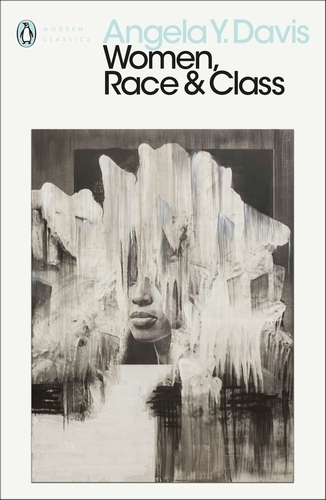
Women, Race, & Class by Angela Y. Davis (1981)
In this seminal work, renowned academic and activist Angela Y. Davis traces the origins of feminism and explains why racism and class prejudice are so entrenched in the movement.

Sister Outsider by Audre Lorde (1984)
In this charged collection of fifteen essays and speeches, Lorde takes on sexism, racism, ageism, homophobia, and class, and propounds social difference as a vehicle for action and change. Her prose is incisive, unflinching, and lyrical, reflecting struggle but ultimately offering messages of hope.

all about love by bell hooks (1999)
In this landmark book, bell hooks explores the question “What is love?” Her answers strike at both the mind and heart. Disputing that the ideal love is infused with sex and desire, she provides a new path to love that is sacred, redemptive, and healing for individuals and for a nation. All About Love is a powerful, timely affirmation of just how profoundly love and community can change hearts and minds for the better.
Race Theory

How to be an Antiracist by Ibram X. Kendi (2019)
Kendi weaves an electrifying combination of ethics, history, law, and science with his own personal story of awakening to antiracism. This is an essential work for anyone who wants to go beyond the awareness of racism to the next step: contributing to the formation of a just and equitable society.

Why I’m No Longer Talking to White People About Race by Reni Eddo-Lodge (2017)
Exploring issues from eradicated black history to the political purpose of white dominance, whitewashed feminism to the inextricable link between class and race, Reni Eddo-Lodge offers a timely and essential new framework for how to see, acknowledge and counter racism. It is a searing, illuminating, absolutely necessary exploration of what it is to be a person of color in Britain today.

The Fire Next Time by James Baldwin (1963)
At once a powerful evocation of James Baldwin’s early life in Harlem and a disturbing examination of the consequences of racial injustice, the book is an intensely personal and provocative document from the iconic author of If Beale Street Could Talk and Go Tell It on the Mountain. It consists of two “letters,” written on the occasion of the centennial of the Emancipation Proclamation, that exhort Americans, both black and white, to attack the terrible legacy of racism.

Uncomfortable Conversations with a Black Man by Emmanuel Acho (2020)
Acho takes on all the questions, large and small, insensitive and taboo, many white Americans are afraid to ask―yet which all Americans need the answers to, now more than ever. With the same open-hearted generosity that has made his video series a phenomenon, Acho explains the vital core of such fraught concepts as white privilege, cultural appropriation, and “reverse racism.” In his own words, he provides a space of compassion and understanding in a discussion that can lack both. He asks only for the reader’s curiosity―but along the way, he will galvanize all of us to join the antiracist fight.

killing rage: Ending Racism by bell hooks (1996)
In incisive essays, hooks addresses the wide spectrum of topics dealing with race and racism in the United States: friendship between Black women and white women; psychological trauma among African Americans; and internalized racism in movies and the media. hooks tackles the bitter difficulties of racism by envisioning a world without it, sharing a vision where “killing rage”―the fierce anger of Black people stung by repeated instances of everyday racism―offers not only a wellspring of love and strength, but also a realistic catalyst for positive change.

We Were Eight Years in Power: An American Tragedy by Ta-Nehisi Coates
We Were Eight Years in Power features Coates’s iconic essays first published in The Atlantic, along with eight fresh essays that revisit each year of the Obama administration through Coates’s own experiences, observations, and intellectual development, capped by a bracingly original assessment of the election that fully illuminated the tragedy of the Obama era. We Were Eight Years in Power is a vital account of modern America, from one of the definitive voices of this historic moment.

So You Want to Talk About Race by Ijeoma Oluo
Ijeoma Oluo guides readers of all races through subjects ranging from police brutality and cultural appropriation to the model minority myth in an attempt to make the seemingly impossible possible: honest conversations about race, and about how racism infects every aspect of American life.
Black History

The New Jim Crow: Mass Incarceration in the Age of Colorblindness by Michelle Alexander (2020)
Alexander offers an indictment of the criminal justice system, arguing that the War on Drugs and policies that deny convicted felons equal access to employment, housing, education, and public benefits create a permanent under caste based largely on race. Includes a new preface for the tenth-anniversary edition discussing the impact the book has had and the state of the criminal justice reform movement today.

Stony the Road: Reconstruction, White Supremacy, and the Rise of Jim Crow by Henry Louis Gates (2019)
If emancipation sparked “a new birth of freedom” in Lincoln’s America, why was it necessary to march in Martin Luther King, Jr.’s America? In this book, Henry Louis Gates, Jr., one of our leading chroniclers of the African-American experience, seeks to answer that question in a history that moves from the Reconstruction Era to the “nadir” of the African-American experience under Jim Crow, through to World War I and the Harlem Renaissance.

The 1619 Project: A New Origin Story edited by Nikole Hannah-Jones (2021)
By framing American slavery not as a blip in its history but the very foundation of a nation, The 1619 Project – originally an award-winning issue of New York Times Magazine before being expanded into this book – reframes the narrative of America, showing how slavery’s influence touches every corner of the country, from art and commerce to food and politics.

Black Box: Writing the Race by Henry Louis Gates (2025)
This is the epic story of how, through essays and speeches, novels, plays, and poems, a long line of creative thinkers has unveiled the contours of—and resisted confinement in—the black box inside which this nation within a nation has been assigned, willy-nilly, from the nation’s founding through to today. This is a book that records the compelling saga of the creation of a people.

The Making of African America: The Four Great Migrations by Ira Berlin (2011)
In this masterful account, Ira Berlin, one of the nation’s most distinguished historians, offers a revolutionary-and sure to be controversial-new view of African American history. In The Making of African America, Berlin challenges the traditional presentation of a linear, progressive history from slavery to freedom. Instead, he puts forth the idea that four great migrations, between the seventeenth and twenty-first centuries, lie at the heart of black American culture and its development.

Black in Blues: How a Color Tells the Story of My People by Imani Perry (2025)
In this book, celebrated author Imani Perry uses the world’s favorite color, blue, as a springboard for a riveting emotional, cultural, and spiritual journey—an examination of race and Blackness that transcends politics or ideology.

Last Seen: The Enduring Search by Formerly Enslaved People to Find their Lost Families by Judith Ann Giesberg (2025)
In this book, celebrated author Imani Perry uses the world’s favorite color, blue, as a springboard for a riveting emotional, cultural, and spiritual journey—an examination of race and Blackness that transcends politics or ideology.
Memoir & Autobiography

The Autobiography of Malcolm X Malcolm X (1965)
Published in 1965 – nine months after his assassination – this autobiography demonstrates everything that made Malcolm X one of the most important Black figures of the 20th Century: his wit, his passion, and his fearlessness, from growing up surrounded by violence to becoming the public, world-changing intellectual we remember him as today.

I Know Why the Caged Bird Sings by Maya Angelou (1969)
This first of a series of memoirs from the famed American poet, memoirist, and civil rights activist covers her life from birth to 17 years old, and made her into a superstar. Of course, you should read her poetry and her books of essays, but to really know Maya Angelou and her work, this is where to start.

When They Call You a Terrorist by Patrisse Khan-Cullors and Asha Bandele (2018)
The founders of the Black Lives Matter movement have been called terrorists and a threat to America, when all they seek is justice for those victimised because of the colour of their skin. In this meaningful and empowering account of survival from one of the founders, she challenges a culture that views Black life as expendable.

Between the World and Me by Ta-Nehisi Coates (2015)
This emotional non-fiction work from 2015, inspired by James Baldwin’s The Fire Next Time, finds American author Ta-Nehisi Coates writing to his teenage son about what it’s like to live as a Black man in America, and the dangers all around: from police, schools, the streets, and nearly everywhere else. It’s as moving as it is heart-breaking.

